


Perfume is far more than just a pleasant smell. Each fragrance is crafted from layers of invisible notes that rise and fade with time, weaving a scent story on your skin. Most people do not realise that a single kilogram of rose essential oil can require around 4,000 kilograms of rose petals. Surprising, right? But that is not the only marvel in perfume composition. The way these notes interact means no two people ever wear the same scent in quite the same way.
Table of Contents
- What Are Perfume Notes And Their Importance?
- The Structure Of Perfume: Top, Middle, And Base Notes
- How Perfume Notes Influence Fragrance Experiences
- The Role Of Natural And Synthetic Ingredients In Notes
- How To Choose Fragrances Based On Notes
Quick Summary
| Takeaway | Explanation |
|---|---|
| Understand perfume note layers | Fragrances consist of top, heart, and base notes, each with unique roles in scent evolution. |
| Personal chemistry affects fragrance | Body chemistry influences how scents develop, making each fragrance unique to the wearer. |
| Choose scents based on occasions | Match light, fresh scents for daytime and deeper notes for evening wear to enhance your experience. |
| Identify your scent personality | Recognise your preference for fresh, floral, or warm notes to guide your fragrance selection process. |
| Test fragrances on skin before buying | Skin interaction can significantly alter scent perception, so always sample before committing to a purchase. |
What are Perfume Notes and Their Importance?
Perfume notes represent the foundational building blocks that create a fragrance’s unique sensory profile. These aromatic elements work together like musical notes in a symphony, producing a complex and harmonious olfactory experience. Perfume composition research reveals that each fragrance comprises multiple layers of scents that emerge and interact over time.
Understanding Perfume Note Architecture
A perfume’s structure typically includes three distinct layers of notes: top notes, heart notes, and base notes. Each layer plays a critical role in the fragrance’s overall character and performance. Top notes are the initial scents you perceive immediately after application, often light and volatile compounds like citrus or fresh herbs. These ephemeral impressions create the first sensory impression and typically last between 5 to 15 minutes.
Heart notes, also called middle notes, emerge once the top notes dissipate. These form the core of the fragrance and represent the primary personality of the perfume. Typically floral, fruity, or spicy, heart notes develop over several hours and provide the sustained character of the scent.
Base notes are the foundation, providing depth and longevity. These rich, complex aromas like woody, musky, or resinous notes anchor the fragrance and can persist for many hours.
Base notes emerge after heart notes and contribute to the perfume’s lasting impression.
Why Perfume Notes Matter
Understanding perfume notes helps consumers make more informed fragrance selections. Each note contributes to the overall sensory journey, transforming the scent from its initial bright introduction to a nuanced, sophisticated experience.
Below is a comparison table to help clarify the roles, characteristics, and duration of each perfume note, supporting your understanding of fragrance architecture.
| Note Type | Role in Fragrance | Typical Characteristics | Approximate Duration |
|---|---|---|---|
| Top Note | First impression | Light, fresh, volatile | 5–15 minutes |
| Heart Note | Core/“heart” of scent | Floral, fruity, spicy | Several hours |
| Base Note | Foundation, longevity | Woody, musky, resinous | Many hours to all day |
By recognising how different notes interact and evolve, fragrance enthusiasts can appreciate the intricate craftsmanship behind each carefully constructed perfume. The interplay between top, heart, and base notes creates a dynamic olfactory narrative that unfolds uniquely on each individual’s skin.
The Structure of Perfume: Top, Middle, and Base Notes
Perfume composition is a sophisticated art form that carefully orchestrates different scent layers to create a compelling olfactory experience. Fragrance research demonstrates that perfumes are meticulously crafted with strategic note arrangements that evolve over time.
The Layered Complexity of Fragrance Notes
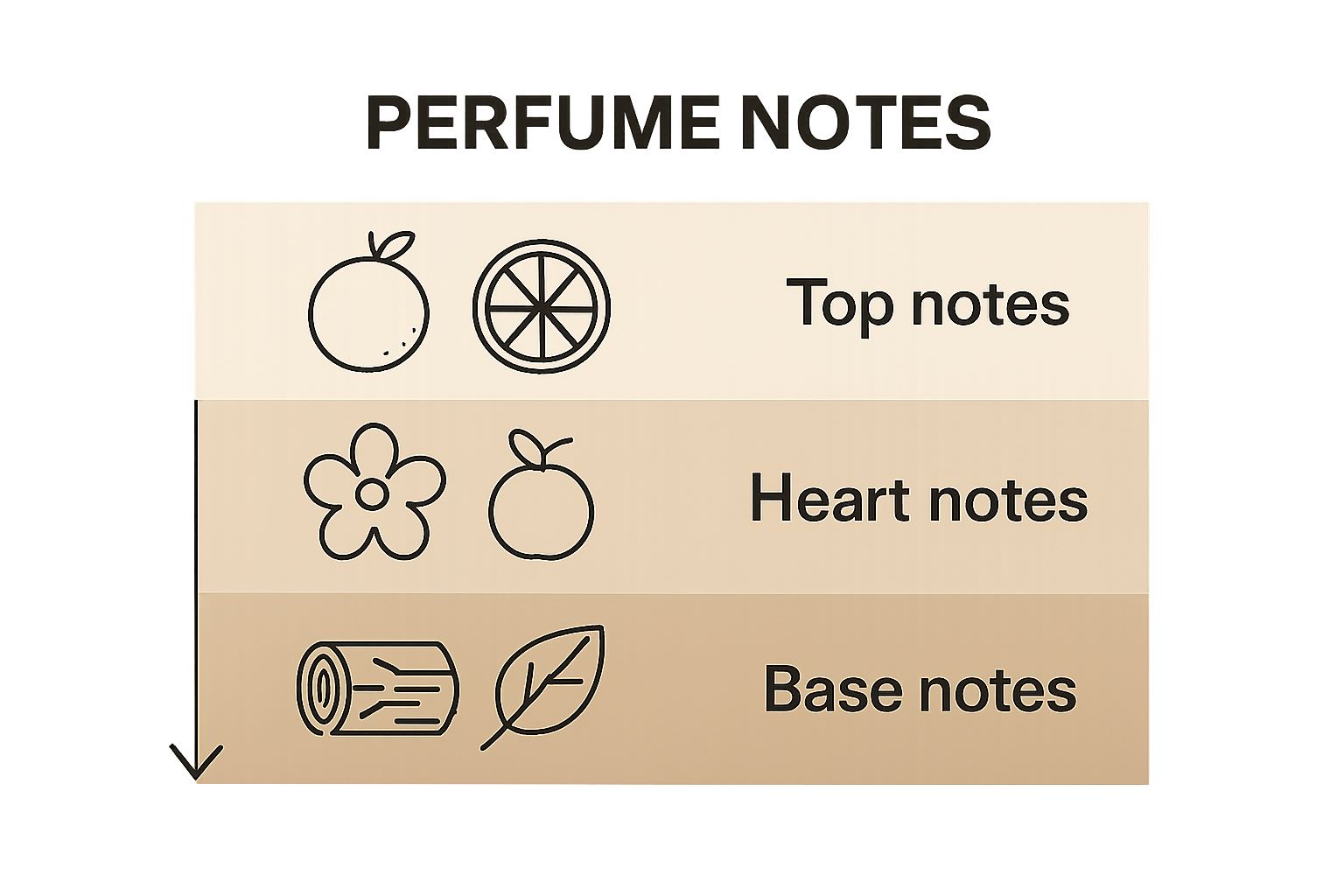
Each perfume functions like a sensory journey, with notes strategically designed to unfold progressively. Top notes represent the initial impression, introducing the fragrance with bright, volatile aromas that capture immediate attention. These lightweight scents typically include citrus elements, fresh herbs, or light fruits that dissipate quickly, lasting approximately 15 minutes after application.
Heart notes, alternatively known as middle notes, emerge as the top notes fade. These constitute the perfume’s core character, representing its primary personality and emotional essence. Heart notes typically feature more complex and rounded fragrances like floral, fruity, or spicy elements. They develop slowly and persist for several hours, creating the perfume’s most memorable and sustained impression.
Base notes form the fragrance’s foundation, providing depth, richness, and longevity. These profound aromas anchor the entire composition, emerging after heart notes and remaining on the skin for extended periods. Base notes often include woody, musky, amber, or resinous elements that create a lasting olfactory memory.
The Scientific Art of Perfume Composition
Understanding note structure enables more nuanced fragrance appreciation. Perfumers carefully balance molecular volatility and interaction to create harmonious scent progressions. Interestingly, identical notes can produce dramatically different experiences depending on their precise combination and proportion.
For enthusiasts wanting to explore designer-inspired fragrance techniques, comprehending these intricate note interactions becomes crucial. The magic of perfumery lies in transforming individual aromatic components into a seamless, evolving sensory narrative that unfolds uniquely on each individual’s skin.
How Perfume Notes Influence Fragrance Experiences
Perfume notes are not merely aromatic components but intricate storytellers that transform a simple scent into a complex sensory journey. Scientific research in olfactory perception reveals how these sophisticated molecular interactions create deeply personal and emotionally resonant experiences.
The Emotional Landscape of Fragrance
Each perfume note carries a unique emotional signature that triggers profound psychological responses. Top notes deliver the initial sensory impact, creating immediate emotional impressions through bright, energetic aromas. These fleeting scents function like an introduction, generating curiosity and anticipation. Citrus notes might evoke feelings of freshness and vitality, while herbal top notes can suggest clarity and invigoration.
Heart notes represent the emotional core of the fragrance, developing more nuanced and complex psychological impressions. Floral heart notes often communicate romanticism and softness, while spicy elements can suggest warmth and intensity. These middle notes create sustained emotional landscapes that resonate deeply with individual memories and sensory associations.
Base notes anchor the fragrance, providing lasting emotional depth. Rich woody or musky base notes can evoke feelings of comfort, sophistication, or sensuality. These profound aromatic foundations transform the fragrance from a mere scent into a powerful emotional experience that lingers intimately with the wearer.
Personal Chemistry and Fragrance Interaction
Interestingly, perfume notes interact uniquely with individual body chemistry, making each fragrance experience profoundly personal. Factors like skin temperature, pH balance, and natural body odour modify how notes unfold and develop. This dynamic interaction explains why identical perfumes can smell remarkably different on various individuals.
For those curious about exploring designer-inspired perfume nuances, understanding these intricate note interactions becomes crucial. The true magic of perfumery lies in creating a sensory narrative that speaks uniquely to each person, transforming aromatic molecules into deeply personal emotional experiences.
The Role of Natural and Synthetic Ingredients in Notes
Scientific research in fragrance chemistry reveals the intricate balance between natural and synthetic ingredients that define modern perfumery. Both ingredient types play crucial roles in creating complex, compelling fragrances that capture diverse sensory experiences.
Natural Ingredients: The Essence of Authenticity
Natural ingredients represent the traditional foundation of perfume composition. Extracted from botanical sources, essential oils, resins, and plant extracts provide rich, authentic aromatic profiles. These ingredients offer complex molecular structures that create nuanced scent experiences. Key natural sources include:
- Lavender from Provence
- Jasmine from southern France
- Sandalwood from India
- Rose petals from Bulgarian fields
- Citrus peels from Mediterranean regions
While natural ingredients deliver extraordinary depth, they also present significant challenges. Seasonal variations, limited harvests, and extraction complexities make consistent production difficult. A single kilogram of rose essential oil, for instance, requires approximately 4,000 kilograms of rose petals.
Synthetic Ingredients: Precision and Innovation
Synthetic ingredients represent technological advancement in perfumery. Chemically synthesized molecules allow perfumers unprecedented creative freedom, enabling the creation of scents impossible to extract naturally. These ingredients provide consistency, affordability, and the ability to craft entirely novel aromatic experiences.
Synthetic notes can replicate natural essences with remarkable accuracy while introducing unique molecular structures that expand olfactory possibilities. They enable perfumers to create more stable, long-lasting fragrances with predictable performance characteristics.
The Harmonious Blend
Modern perfumery increasingly embraces a sophisticated approach that combines natural and synthetic ingredients. This nuanced strategy allows perfumers to balance authenticity with innovation, creating fragrances that are both emotionally resonant and technically precise.
For fragrance enthusiasts interested in exploring high-quality perfume alternatives, understanding this intricate ingredient interplay becomes crucial. The true artistry of perfumery lies in seamlessly integrating these diverse aromatic components into a harmonious, compelling sensory experience.
How to Choose Fragrances Based on Notes
Consumer fragrance selection research demonstrates that understanding perfume notes transforms the process of selecting a signature scent from intimidating to intuitive. Choosing fragrances becomes an art of personal expression when you understand how different notes interact and reflect individual personality.
Understanding Your Scent Personality
Personal fragrance selection begins with recognising your natural preferences and emotional connections to specific aromas. Scent personalities typically fall into several categories:
- Fresh and Vibrant: Individuals who prefer citrus, green, and aquatic notes
- Romantic and Soft: Those drawn to floral and delicate fragrances
- Warm and Sensual: People who appreciate woody, musky, and oriental notes
- Energetic and Spicy: Those who enjoy complex, intense aromatic compositions
Your preferred notes often reflect deeper aspects of your personality.
This table summaries common scent personality types alongside the notes and examples typically favoured within each category, assisting you in aligning choices with personal preference.
| Scent Personality | Preferred Notes | Common Examples |
|---|---|---|
| Fresh and Vibrant | Citrus, green, aquatic | Bergamot, green tea, lemon |
| Romantic and Soft | Floral, delicate | Rose, jasmine, peony |
| Warm and Sensual | Woody, musky, oriental | Sandalwood, amber, vanilla |
| Energetic and Spicy | Spicy, complex | Pepper, cardamom, cinnamon |
Matching Notes to Occasions
Different occasions and environments demand distinct fragrance profiles. Daytime fragrances typically feature lighter, more transient notes like bergamot, green tea, or soft florals. Evening fragrances often incorporate richer, more complex compositions with deeper base notes such as vanilla, sandalwood, or amber.
Consider the emotional landscape you wish to create. A job interview might benefit from a clean, understated fragrance, while a romantic evening could call for a more intense, provocative scent composition.
Practical Selection Strategies
When exploring unisex fragrance options, focus on understanding how individual notes interact rather than being constrained by traditional gender classifications. Modern fragrance appreciation celebrates personal interpretation over rigid categorisation.
Always test fragrances on your skin, recognising that body chemistry dramatically influences how notes develop. What smells extraordinary on a test strip might transform completely when interacting with your unique biochemistry. Patience and experimentation are key to discovering your perfect fragrance.

Discover Fragrance Notes Tailored for You
Struggling to choose a fragrance that truly fits your personality or occasion? If understanding top, heart, and base notes seems complicated, you are not alone. Many people feel overwhelmed by the variety and depth of scent compositions discussed in our article. At Barcode Fragrances, we make the art of fragrance accessible, helping you bridge the gap between curiosity and confidence. For those eager to explore all scent types in one place, browse our Collection and see how different notes can be experienced first-hand.

Let the knowledge you have just gained guide you to a fragrance you will cherish. Enjoy premium oils, beautiful packaging, and signature blends that elevate your daily experience without the high price tag. Visit barcodefragrances.co.uk today and take the first step towards a more personal and rewarding fragrance routine. Your perfect scent awaits—explore now and transform what you know about perfume into something you love.
Frequently Asked Questions
What are the different types of perfume notes?
Perfume notes are categorised into three main types: top notes, heart notes (middle notes), and base notes. Top notes provide the initial impression and are light and volatile, heart notes form the core of the fragrance, and base notes provide depth and longevity.
How long do different perfume notes last after application?
Top notes usually last for 5 to 15 minutes, heart notes can develop over several hours, and base notes remain on the skin for an extended period, often lasting for hours or even all day.
Why is understanding perfume notes important when choosing a fragrance?
Understanding perfume notes helps consumers make informed fragrance selections by recognising how different scents interact and evolve over time, leading to a more satisfying olfactory experience.
How do personal body chemistry and fragrance notes interact?
Personal body chemistry affects how a fragrance develops, as factors like skin temperature and pH can alter the scent profile. This means that the same fragrance can smell different on various individuals.