


Perfume is more than a pleasing scent, it is a careful mix of chemistry and creativity pulled from nature and science. Most people are surprised that a single drop of pure perfume can contain up to 200 unique ingredients blended with meticulous precision. Yet, aroma alone is only part of the story. The secret power of a memorable fragrance comes from molecules built to last, creating a signature presence far beyond that first spritz.
Table of Contents
- The Science Of Fragrance: How Perfumes Are Made
- Understanding Fragrance Notes: The Building Blocks
- Why Longevity Matters: The Impact Of Lasting Scents
- Factors Influencing Perfume Longevity: Key Elements
- Real-World Applications: Choosing A Lasting Perfume
Quick Summary
| Takeaway | Explanation |
|---|---|
| Extraction is essential for fragrance creation | Aromatic compounds must be carefully extracted from natural sources using methods like steam distillation or cold pressing. |
| Understanding fragrance notes enhances olfactory experiences | Top, middle, and base notes structure a fragrance’s scent journey and emotional impact over time. |
| Longevity affects perception and value of scents | A lasting fragrance contributes to personal branding and reduces the need for reapplications, enhancing practicality. |
| Skin chemistry is crucial for perfume performance | Individual differences in skin pH and hydration significantly influence how a fragrance develops and lasts. |
| Concentration determines lasting power | Higher concentrations, like extrait de parfum, provide the longest-lasting scents, guiding informed purchasing choices. |
The Science of Fragrance: How Perfumes Are Made
The world of perfumery is an intricate blend of art, chemistry, and sensory expertise. Creating a lasting fragrance involves sophisticated scientific processes that transform raw botanical materials and synthetic compounds into complex aromatic experiences. Learn more about perfume composition reveals the meticulous craft behind every bottle of perfume.
The Extraction of Aromatic Compounds
Perfume creation begins with extracting essential oils from natural sources like flowers, fruits, woods, and herbs. Perfumers employ multiple extraction techniques to capture these delicate aromatic compounds. Steam distillation remains the most traditional method, where plant materials are heated to release volatile oils that are then collected and refined. More advanced techniques like solvent extraction and cold pressing allow perfumers to capture more nuanced fragrances with greater purity.
Blending and Formulation
Once aromatic compounds are extracted, master perfumers blend them into intricate compositions. This process requires extraordinary precision and creativity. Perfume notes are strategically layered into top, middle, and base categories to create a complex olfactory experience. Synthetic molecules are often introduced to enhance longevity, stability, and unique scent profiles. Explore our guide on understanding perfume notes for deeper insights into this fascinating process.
Key elements in perfume formulation include:
- Concentration of aromatic compounds
- Balance between natural and synthetic ingredients
- Understanding molecular interactions
- Precise temperature and mixing controls
The art of perfumery transforms raw ingredients into sensory masterpieces that capture emotions, memories, and individual expressions through carefully crafted scent profiles.
Understanding Fragrance Notes: The Building Blocks
Fragrance notes are the fundamental components that compose a perfume’s unique olfactory profile. Like musical notes in a symphony, these aromatic elements combine to create a complex and harmonious sensory experience. Research from the Fragrance Foundation highlights how these carefully selected notes determine a perfume’s character and emotional resonance.
Top, Middle, and Base Notes
Perfumers structure fragrances using a strategic layering of notes that unfold over time. Top notes are the initial impression, typically light and volatile compounds that evaporate quickly. These first scents create an immediate sensory impact lasting approximately 15 minutes. Middle notes emerge after the top notes dissipate, representing the heart of the fragrance and lasting around two to four hours. Base notes form the foundation, providing depth and longevity to the perfume. These rich, heavy molecules anchor the scent and can persist for several hours.
Molecular Composition and Interaction
The science behind fragrance notes involves intricate molecular interactions. Synthetic and natural compounds are meticulously selected for their volatility, molecular weight, and complementary characteristics. Some molecules enhance projection, while others contribute to the scent’s longevity. Discover how we craft designer inspired perfumes to understand this delicate balance.
Key characteristics of fragrance notes include:
- Volatility and evaporation rates
- Chemical complexity
- Molecular weight
- Interaction with human skin chemistry
Understanding fragrance notes transforms perfume from a simple accessory into a nuanced art form, where each molecular component plays a crucial role in creating an unforgettable sensory journey.
To clarify the differences and functions of fragrance notes, the following table summarises the key characteristics of top, middle, and base notes in perfumes.
| Fragrance Note Type | Role in Perfume | Typical Duration | Key Characteristics |
|---|---|---|---|
| Top Notes | Initial impression | ~15 minutes | Light, volatile, evaporate quickly |
| Middle Notes | Heart of the fragrance | 2-4 hours | Balancing, complex, become prominent |
| Base Notes | Foundation and longevity | Several hours | Rich, heavy, anchor the scent |
Why Longevity Matters: The Impact of Lasting Scents
Fragrance longevity represents more than just a technical measure of performance it is a critical aspect of personal expression and sensory experience. Consumer research in fragrance psychology demonstrates that a perfume’s lasting power significantly influences how individuals perceive its quality and value.
Personal and Social Dimensions
A long lasting fragrance communicates confidence and sophistication. When a scent remains consistent throughout the day, it creates a continuous olfactory signature that becomes part of an individual’s personal brand. This persistent presence allows wearers to make a memorable impression in professional and social settings. The ability of a fragrance to endure reflects the wearer’s attention to detail and personal presentation.
Economic and Practical Considerations
Longevity directly impacts the practical value of a perfume. A fragrance that maintains its complex note structure over extended periods requires fewer reapplications, making it more economical. Learn more about our approach to luxury fragrances to understand how quality ingredients contribute to sustained performance.
Key factors influencing fragrance longevity include:
- Concentration of aromatic compounds
- Quality of base notes
- Individual skin chemistry
- Environmental conditions
Understanding fragrance longevity transforms perfume from a temporary accessory into a strategic element of personal style, where each molecule is carefully designed to provide a lasting sensory experience.
Factors Influencing Perfume Longevity: Key Elements
Perfume longevity is a complex interplay of scientific principles, ingredient quality, and individual physiological characteristics.
Scientific research in fragrance chemistry reveals the intricate mechanisms that determine how long a scent will persist on human skin.
Molecular Structure and Composition
The molecular weight and chemical structure of fragrance components fundamentally determine their persistence. Heavier molecules with complex structures tend to evaporate more slowly, creating a longer lasting scent profile. Essential oils and synthetic compounds with larger molecular chains anchor themselves more effectively to skin, extending the fragrance experience. Perfumers strategically select and blend these molecules to create scents that unfold gradually and maintain their character over extended periods.
Physiological and Environmental Interactions
Individual skin chemistry plays a crucial role in perfume performance. Factors such as skin pH, moisture levels, and body temperature dramatically influence how a fragrance develops and dissipates. Dry skin tends to absorb and break down scent molecules more quickly, whereas well hydrated skin provides a more stable environment for fragrance retention. Explore our guide on selecting the perfect fragrance to understand these nuanced interactions.
Critical factors affecting perfume longevity include:
- Skin hydration levels
- Body temperature
- Ambient humidity
- Personal metabolic rate
- Concentration of aromatic compounds
Understanding these complex interactions transforms perfume selection from a simple aesthetic choice to a sophisticated sensory experience tailored to individual characteristics.
Real-World Applications: Choosing a Lasting Perfume
Selecting a perfume with exceptional longevity requires understanding beyond aesthetic preferences. Consumer research in fragrance selection demonstrates that informed choices lead to more satisfying fragrance experiences.
Concentration and Performance
Perfume concentration directly correlates with its lasting power.
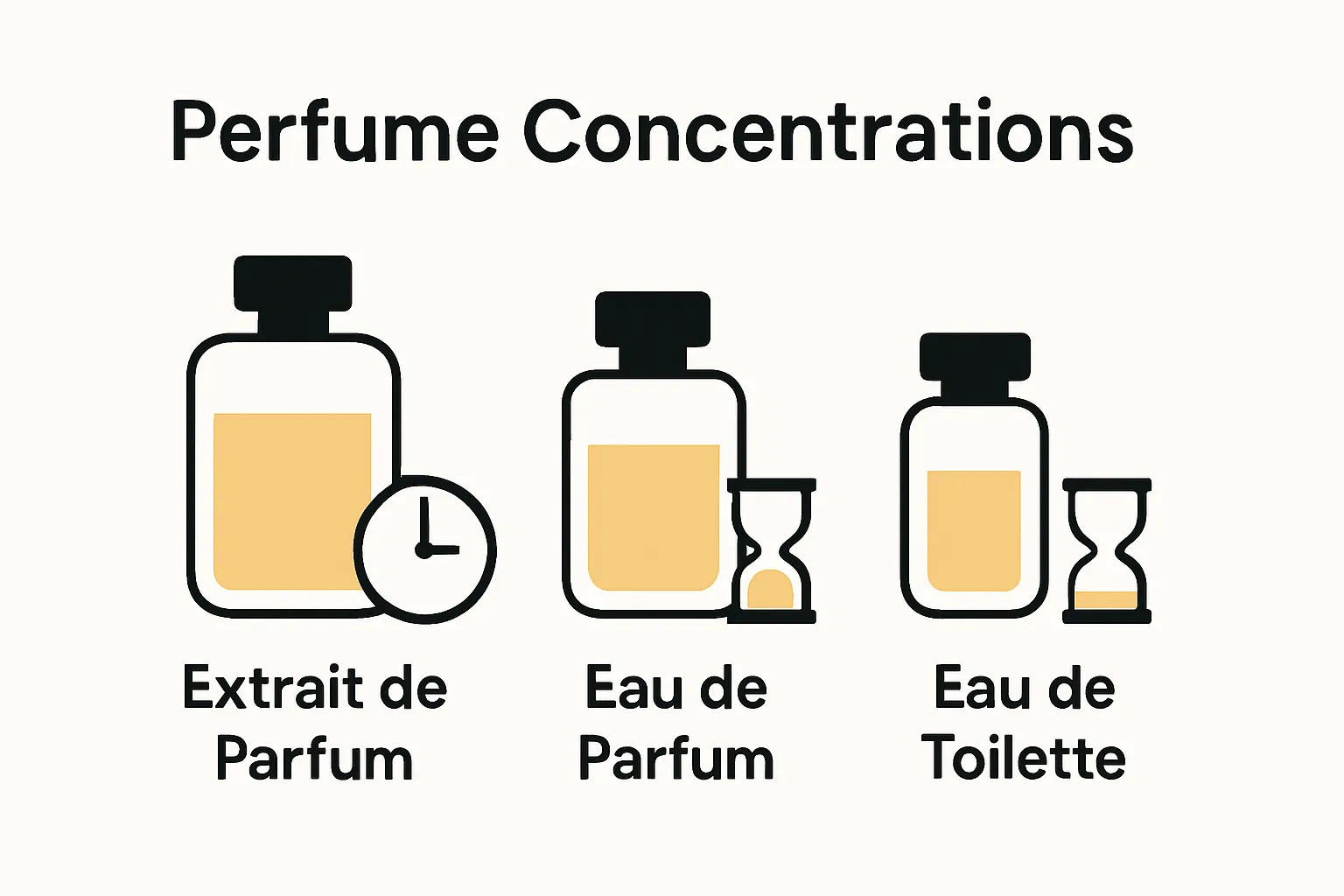 Extrait de parfum represents the most concentrated formulation, containing 20 to 40 percent pure fragrance compounds. These premium formulations provide remarkable longevity, often persisting eight to ten hours on the skin. Eau de parfum offers a balanced alternative, with 15 to 20 percent concentration, delivering substantial performance while remaining more accessible. Understanding these concentration levels empowers consumers to make strategic purchasing decisions.
For readers seeking to compare perfume types based on their concentration and lasting power, the table below offers an at-a-glance reference to guide informed purchasing decisions.
| Perfume Type | Concentration of Fragrance Compounds | Typical Longevity | Accessibility |
|---|---|---|---|
| Extrait de Parfum | 20-40% | 8-10 hours | Premium |
| Eau de Parfum | 15-20% | 4-8 hours | Widely available |
| Eau de Toilette | 5-15% | 2-4 hours | Very accessible |
| Eau de Cologne | 2-5% | 1-2 hours | Common for fresh scents |
Practical Selection Strategies
Beyond concentration, selecting a lasting perfume involves considering personal chemistry and application techniques. Moisturised skin provides a superior base for fragrance retention, creating a more stable environment for scent molecules. Discover effective perfume sampling techniques to explore how different fragrances interact with your unique skin profile.
Key considerations when choosing a lasting perfume include:
- Verify fragrance concentration levels
- Test perfume on your skin, not just paper
- Consider base note complexity
- Evaluate performance across different environments
- Understand your personal skin chemistry
A thoughtful approach transforms perfume selection from a casual purchase into a personalised sensory journey, where longevity becomes a reflection of individual style and sophistication.
Experience True Longevity With Barcode Fragrances
Tired of investing in perfumes only to find the scent fades by midday? Longevity is more than a luxury—it is the secret to a fragrance that expresses your style from morning until evening. In our article, you discovered the importance of concentration, quality ingredients and how fragrance notes influence lasting power. At Barcode Fragrances, we address these exact concerns by blending premium oils and expertly balanced compositions to ensure your signature scent lingers beautifully.
Why settle for unpredictable results when you can enjoy the confidence of a perfume designed to last? Explore our thoughtfully curated selections at Barcode Fragrances. Choose a fragrance that matches your lifestyle today. Visit Barcode Fragrances now to experience long-lasting luxury, beautifully presented and affordably yours.
Frequently Asked Questions
What factors influence the longevity of a perfume?
Longevity is influenced by several factors, including the concentration of aromatic compounds, the quality of base notes, individual skin chemistry, and environmental conditions such as humidity and temperature.
How can I choose a perfume that lasts longer on my skin?
To choose a lasting perfume, consider its concentration level, opt for moisturised skin for better retention, and test the fragrance directly on your skin rather than on paper for a more accurate assessment of its longevity.
What is the difference between extrait de parfum and eau de parfum regarding longevity?
Extrait de parfum has a higher concentration of pure fragrance compounds (20-40%), resulting in remarkable longevity of up to 8-10 hours, while eau de parfum typically contains 15-20% concentration, offering substantial performance but is often more accessible.
How does individual skin chemistry affect perfume longevity?
Individual skin chemistry, influenced by factors like pH levels, moisture content, and body temperature, can affect how a fragrance develops and lasts. Well-hydrated skin generally retains fragrances better compared to dry skin.